-p-1600.avif)


.avif)
Why Proptech Platforms Are Cutting Construction's Software Sprawl, And What's Winning in 2026


The Proptech market is undergoing a structural shift toward integrated Asset Information Management platforms, driven by global regulatory mandates like the UK’s Building Safety Act. High-growth segments are transitioning from static document storage to live, auditable environments. Strategic value is increasingly concentrated in the "handover" phase: the point where seamless data flow between contractors and owners reduces operational risk.
Executive Summary
- New Building Standards: Construction is moving away from just selling software toward a model where digital tools are a legal requirement for the entire life of a building.
- Moving to All-in-One Tools: Companies are stopping the use of simple folder systems like SharePoint and moving to complete platforms to keep all building data in one place for many years.
- Proving Technical Skills: Winning new business now depends on providing high-quality technical details and digital building models that fit easily into the daily work of designers.
The Digitalization Mandate
In recent years, digitalization has been at the cented of conversation when it comes to business decision, and the construction industry is not the exception. The industry is entering a stage of restructuration due to regulatory pressure and growing demand for data management. Buildings are now expected to have a complete, traceable record of data; from the first day of construction through decades of ownership, and companies that can't provide that are facing legal consequences and losing business.
This newly found pressure is driving serious investment in PropTech. Construction firms, property owners and managerts are all looking for modern software that helps them keep data organized, accessible and compliant. The most critical point where this technology proves it value its the handover phase; when a finished construction goes from contractor to owner, here the right technology cave save a lot of time and money.
Quick Summary Table
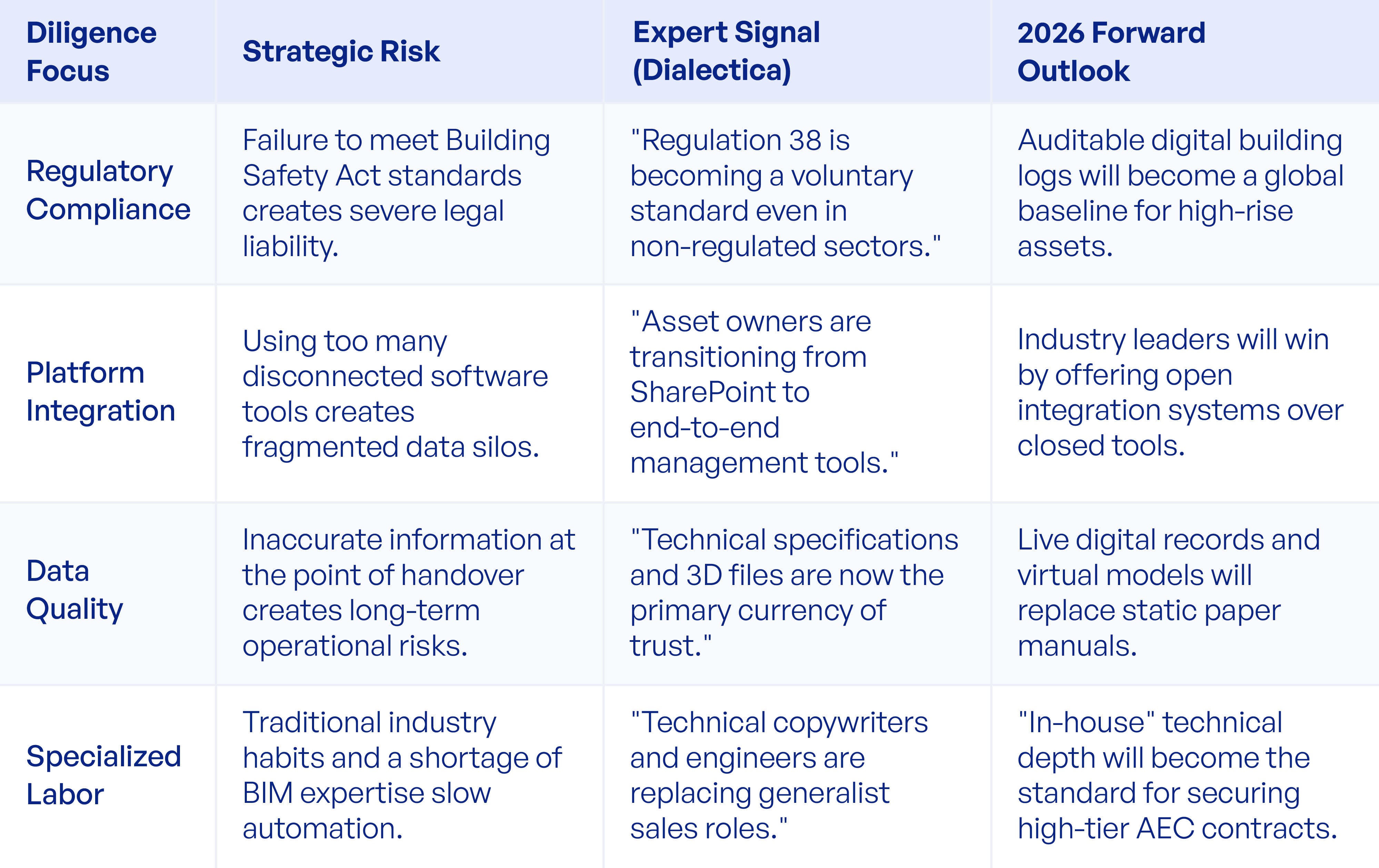
1. The Stage of Restructuration: Market Sizing & Growth
The AEC software space is moving away from the era of simple resale. Insights from Dialectica’s expert network suggest that organizations are prioritizing "technical depth" to fund the "single source of truth" required by new building safety legislation.
- Valuation Explosion: Former resellers are seeing valuations surge as they pivot into specialized software publishing. One entity in the Autodesk ecosystem grew its EBITDA from $16.5 million to over $55 million in under five years.
- The Digital Shift: 75% of B2B construction deals are expected to involve mandatory digital data requirements like BIM models as a prerequisite for tender by 2028.
- Market Valuation: Specialized technical data platforms have reached valuations of $22 million by providing the exact technical specifications that architects copy directly into their designs.
2. Choosing the Right Partner: Industry Structure
Picking a partner today is about more than just price. The market is now split between big global names and smaller technical experts.
- Global giants like Autodesk and Procore lead the market, but they often need help from specialized partners to handle the final data handover.
- Companies like Zutec, Glider, and Cognica are essential. They make sure building data is live and meets all local laws.
- In the European market, success comes from knowing local building laws and being able to handle complex Advanced Analytics Software.
- Many investors are watching the ERP Software market to see how these tools will eventually merge into larger business systems.
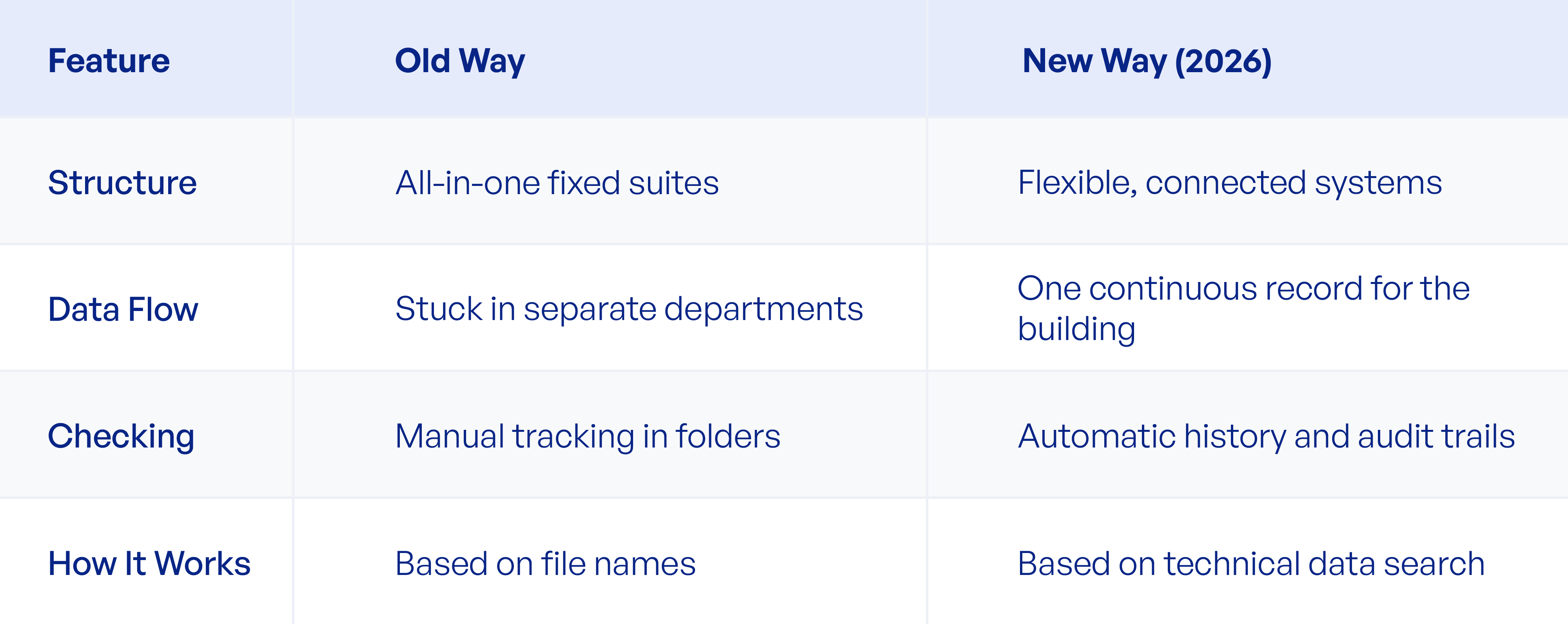
3. Beyond the SharePoint Folder: Innovation & Platforming
The time of simple digital filing cabinets is over. The industry is moving toward flexible systems that can change as technology improves.
- The Shift: Simple systems are being replaced by integrated platforms like Plentific or Twinview. These tools manage buildings and meet safety laws in one place.
- Staying Flexible: By keeping different parts of the software separate, companies can test new features without breaking their main ERP Software.
- Privacy and Rules: Adding Data Security and Privacy Software directly into the digital record helps companies follow the law without slowing down their work.
4. New Market Habits
Being a technical expert is now more important than just having good sales relationships. Experts see a big shift in how companies deal with their customers.
- Trust and Accuracy: Success comes from providing the technical files and 3D models that designers actually use every day.
- Fast Results: Mid-sized companies want to see proof that software works before they buy it. They often ask for a small test project to show the data meets all safety rules.
- Technical Focus: Software companies are hiring more engineers and technical writers instead of traditional salespeople to better support architects.
Expert Reality vs. Industry Hype
- Hype: "AI will replace architects and engineers immediately."
- Reality: Interviews show AI is a tool to help people work faster. Because safety mistakes lead to legal trouble, humans still make the big decisions.
- Hype: "Proptech is just an optional upgrade to save a bit of time."
- Reality: For tall buildings, this software is now a legal requirement. It is about following the law and staying out of court.
Proptech FAQ
Q: Why are companies trying to use fewer software tools?
A: Using too many separate tools for one building makes it impossible to keep data organized. Using one main system saves money and is similar to what happens in Network and Endpoint Security Software.
Q: How does the "Golden Thread" change building work?
A: It makes building data a vital asset. Owners are moving away from simple folders toward systems that act as a single source of truth for all building information.
Q: Can big US companies win in Europe?
A: Not without local help. They often lack the specific features needed for European building laws, so they partner with local experts who understand the rules.
Q: Where is the most money being made in Proptech?
A: It is not in simple home apps, but in specialized tools that help big buildings follow safety laws and manage the handover of data.
Market Implications for 2026
- Institutional Investment Focus: Market activity suggests a preference for software providers that secure compliance with local laws. These solutions are generally more difficult to replace because they are essential for legal operation.
- Technical Product Design: Future product priorities emphasize systems that connect easily with other tools. Without this integration, platforms may fail to provide the complete, traceable record that buildings now require.
- Asset Ownership Strategy: Industry behavior points toward a need for high-quality data from the earliest stages of construction. Correcting or organizing data at the handover phase is often found to be too costly and complex.
Sources & External Signals