-p-1600.avif)


.avif)

The data and analytics software market has evolved from a supporting IT function into a core strategic capability for modern enterprises. According to anonymized expert interviews conducted by Dialectica, organizations increasingly treat analytics platforms as decision infrastructure rather than reporting tools.
This strategic shift is underlined by structural changes in the workforce, with employment in data science roles projected to grow 34% in the coming decade, underscoring the sustained, increasing demand for professionals who can leverage these platforms for mission-critical decision-making.
Insights shared by interviewed executives suggest that the acceleration of cloud adoption, AI-driven modeling, and real-time data processing has shifted analytics closer to the executive agenda. Rather than optimizing isolated use cases, companies are now focused on integrating analytics across finance, operations, marketing, and risk functions.
Key takeaway: Growth is no longer driven by data availability alone, but by the ability to operationalize insights at scale, supported by a specialized workforce.
Quick Summary Table
Key Focus Areas
Market Sizing and Growth Momentum in Analytics Platforms
According to anonymized expert interviews conducted by Dialectica, growth in the business analytics software market reflects structural demand rather than uniform expansion. Executives observed that while analytics budgets remain resilient, spending is increasingly scrutinized at the use-case level.
This structural demand is rooted in the strategic necessity for data-driven roles. While many firms adopt advanced analytics platforms, fundamental skills such as excel in data analytics remain essential for early stage data exploration and trend analysis, especially among teams transitioning from manual to automated systems. The projected 34% employment growth for data scientists in the U.S. indicates a long-term economic commitment to leveraging sophisticated analytics tools.
Interviews suggest that growth momentum is strongest where analytics directly influences revenue, cost control, or regulatory exposure. Areas such as predictive modeling, operational intelligence, and real-time decision support continue to attract investment, while more generic reporting tools face pricing pressure.
Key takeaway: Market expansion is real, but highly uneven across analytics categories, driven by specific, high-ROI use cases.
Fragmentation and Industry Structure Across the Analytics Stack
Experts participating in Dialectica interviews described a fragmented ecosystem across the data analytics software market, shaped by specialization rather than scale alone.
Rather than a single dominant platform, organizations typically deploy:
- Core data infrastructure and integration layers
- Domain-specific analytics tools
- Visualization and business intelligence interfaces
This modular structure creates switching costs at the system level, even as individual tools remain replaceable. Executives noted that differentiation increasingly depends on how well platforms integrate into existing data pipelines and business workflows.
For deeper intelligence: Big Data and Advanced Analytics Software → https://www.dialectica.io/origin/industry/big-data-and-advanced-analytics-software
Innovation Trends and Product Platforming in Data & Analytics
Interviewed executives observed that innovation in the big data analytics software market is shifting away from algorithmic novelty toward usability, explainability, and governance.
AI-driven analytics is now expected, not exceptional. What differentiates platforms is their ability to:
- Translate outputs into operational decisions
- Maintain auditability and transparency
- Support regulated and risk-sensitive environments
This focus on trust is paramount. Independent analysis across 200 AI use cases in public administration found that every single one of them could pose ethical or operational risks if not designed and implemented in a trustworthy manner. This confirms that compliance, explainability, and the establishment of robust “guardrails” are not secondary features but foundational requirements for scaling advanced analytics solutions across high-stakes enterprise environments.
As a result, analytics platforms are evolving into embedded decision layers rather than standalone insight engines.
Regional Insights
Image placement: Insert the “Regional Insights” graphic here, directly under this heading.
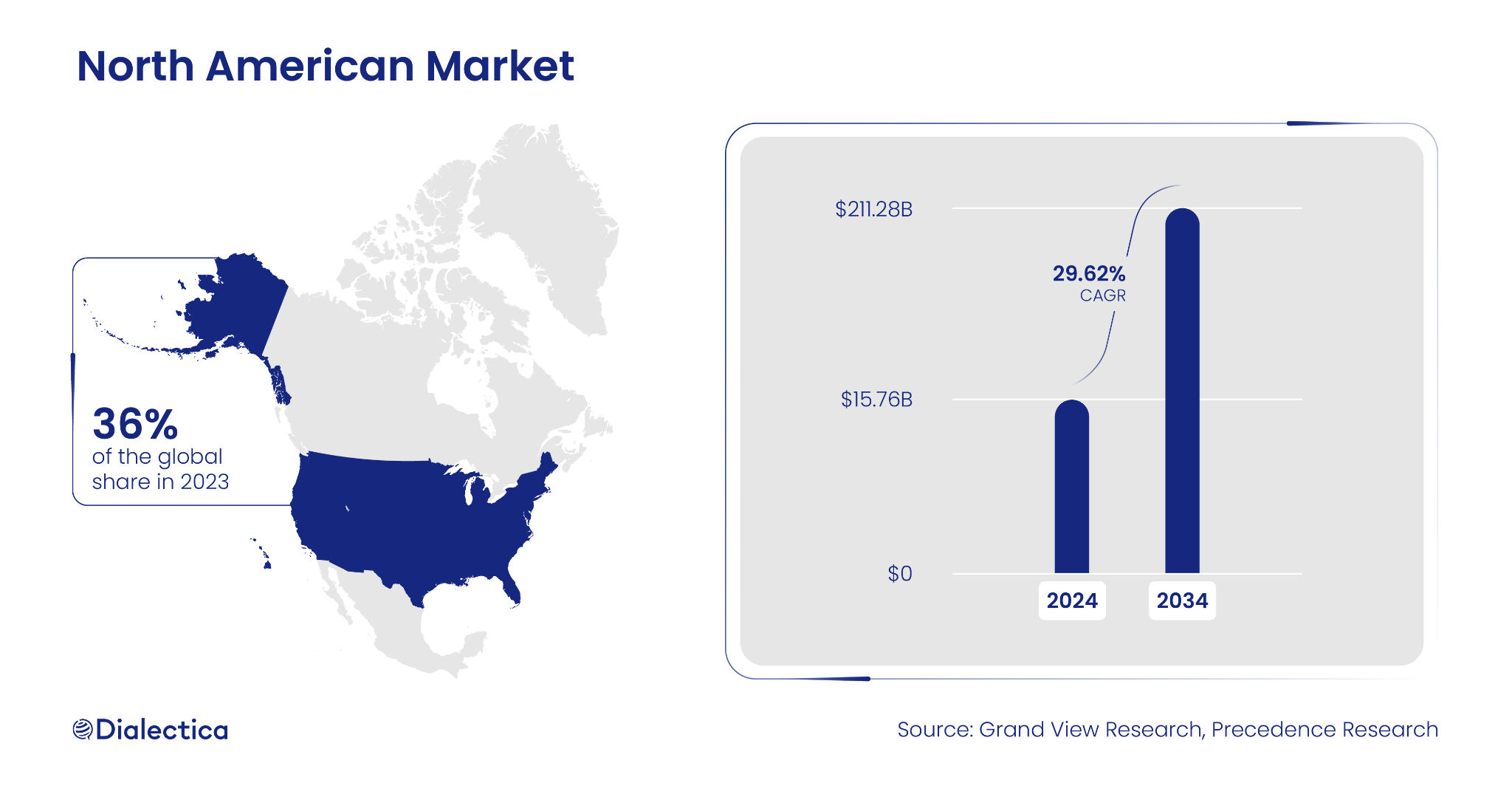
North America: Advanced Adoption with Higher Governance Expectations
Based on anonymized expert insights and publicly available regulatory signals, North America remains one of the most mature regions within the data and analytics software market. Executives observed that U.S.-based enterprises often lead in early adoption, but also apply stricter ROI thresholds and governance requirements.
Europe and Asia-Pacific: High-Growth Regions Shaped by Cloud and Compliance
Interviews suggest that Europe and Asia-Pacific are seeing accelerated investment in cloud-based infrastructure, AI-powered analytics, and real-time business intelligence.
Crucially, adoption in Europe is increasingly defined by explicit regulatory demands. Major European legislation, set to be fully applicable around 2025-2027, introduces significant obligations on cloud service providers to remove contractual, commercial, and technical barriers to switching, including phasing out data export (egress) fees. This regulatory action is strategically driving platform design toward enforced interoperability and data portability, challenging traditional vendor lock-in models and transforming the structure of the regional cloud analytics market.
Experts noted that adoption often depends on local compliance requirements, data residency expectations, and the availability of implementation partners.
Distribution and Profitability in Cloud-Based Business Analytics Software
According to interviewed executives, distribution is increasingly shaped by ecosystem partnerships, cloud marketplaces, and integration-led expansion within enterprise stacks. Experts noted that analytics platforms are most defensible when embedded into core operational systems, where data flows directly into finance, procurement, and operational workflows. Profitability is therefore closely linked to retention, given the operational disruption associated with replacing analytics capabilities that are tightly coupled with systems of record.
For deeper intelligence: ERP Software → https://www.dialectica.io/origin/industry/erp-software
What Experts Say vs. Common Assumptions in the Market Analytics Software Landscape
How Calls Are Used in Diligence
Private equity teams use expert interviews to validate which segments are expanding, test whether differentiation is durable, and assess customer stickiness in modular stacks. Corporate strategy leaders use calls to understand build-versus-buy decisions, integration dependencies, and the organizational change required to operationalize analytics.
For deeper intelligence: Origin → https://www.dialectica.io/origin/
Common Investor Questions
Q1. Where is growth most durable in the data & analytics landscape? Experts suggest durability is highest where analytics is tied directly to revenue impact, cost control, or regulatory risk. Q2. What are the biggest friction points in adoption? Interviews highlight integration complexity, data quality, and governance constraints as recurring barriers. Q3. Does AI reduce the need for specialized analytics tools? Experts observed that AI increases the number of use cases, but does not eliminate the need for domain-specific tools and governance controls. Q4. What signals platform stickiness? Deep integration into workflows, strong data governance, and ecosystem compatibility were cited as leading indicators.
What Investors Learn from Dialectica Insights
Insights from anonymized expert interviews help investors distinguish headline market narratives from operational reality—clarifying where growth is structural, where it is cyclical, and what drives real adoption at the platform level.
Strategic Implications for the Data & Analytics Software Market
The data & analytics software market is shifting from experimentation to operationalization. Strategic advantage will accrue to platforms and ecosystems that combine integration depth, governance readiness, and decision-level usability.
In summary, analytics is becoming less about producing insights and more about embedding intelligence into how organizations run, with regulatory mandates and talent demand providing strong structural tailwinds for investment in compliant, interoperable, and trustworthy
External Sources
- U.S. Bureau of Labor Statistics (Occupational Outlook Handbook: Data Scientists, 2024-2034 Projections)
- OECD (Governing with Artificial Intelligence: The State of Play and Way Forward in Core Government Functions)
- European Union Data Act (Regulation on harmonized rules on fair access to and use of data)